QR Code Scanner & Barcode Read
- 4.2
- Rating
- 10.00M
- Installs
- Free
- Price

 Analysis by App-foxy
I like tools that solve one small problem without making me learn an entire system, and QR Code Scanner & Barcode Read fits that description. It is a free productivity app from QR & Barcode Scanner, built around a single practical capability: pointing a phone at a QR code or barcode and getting the result quickly. That narrow focus is also its main strength. I do not open it expecting a shopping platform, document manager, or social feature; I open it when I need to read something printed on a label, screen, ticket, package, or sign.
After using it, my impression is that the one-click approach matters more than a long feature list. A scanner is most useful when I am standing in a shop, waiting at a counter, checking product packaging, or trying to open information displayed on another device. In those moments, extra menus and complicated setup only slow me down. The real value here is reducing the distance between seeing a code and understanding what it contains.
The app has a 4.2 average from around 41 thousand ratings, with over 10 million installs. Those figures suggest that it has found a broad audience, but they do not change my practical conclusion: this is best judged as a focused utility rather than a complete digital assistant. It is free to install, intended for Everyone, and supports devices running Android 6.0 or later. The current version is 1.4.1, so compatibility is reasonably wide for people using older Android phones.
You May Also Like

 Blood Strike: 2.5 Anniversary
Blood Strike’s Loadouts Turn Every Drop Into a Tactical Gamble
A close look at Blood Strike’s custom loadouts: how fast access to signature weapons reshapes its battle royale rhythm, rewards preparation, and narrows the gap between fights.

 Pandora - Music & Podcasts
Pandora’s Music Is Easy to Start, but Harder to Recover
Pandora’s strength is its low-effort path from a seed to a station. Its weak spot is how much confidence it asks you to place in connection, setup, and quiet recovery.

 8 Ball Pool
 Is Built on Rivalries, Rematches, and Routine
A close look at the rivalries, rematches, shared routines, and unanswered safety questions that turn a quick pool match into a persistent mobile community.

 Samsung Music
’s Quiet Strength Is Playing What You Already Own
Its reach comes less from spectacle than from dependable access to a personal library. That simplicity is both the app’s strongest retention engine and its ceiling.

 AccuWeather: Weather Radar
AccuWeather Review: A Quick, Clear Forecast for Everyday Decisions
For everyday plans, the best forecast is the one you can understand quickly. AccuWeather makes rain timing, radar, and local conditions easy to act on, with a few trade-offs.

 Hill Climb Racing
Why Hill Climb Racing Still Turns Crashes Into One More Run
A tiny car, a bumpy hill and one more upgrade: Hill Climb Racing keeps resurfacing because its simple chaos makes every near-miss feel personal.
More From Our News Desk



A focused scanner that earns its place through speed
I look at this scanner as a small, occasional-use tool rather than something that needs to stay open in the background. In this section, I’ll consider how a scan can lead into an online task and why the code’s destination—not just how quickly it is read—shapes the experience. That distinction also helps explain which everyday settings suit a dedicated scanner best.
The capability that matters most
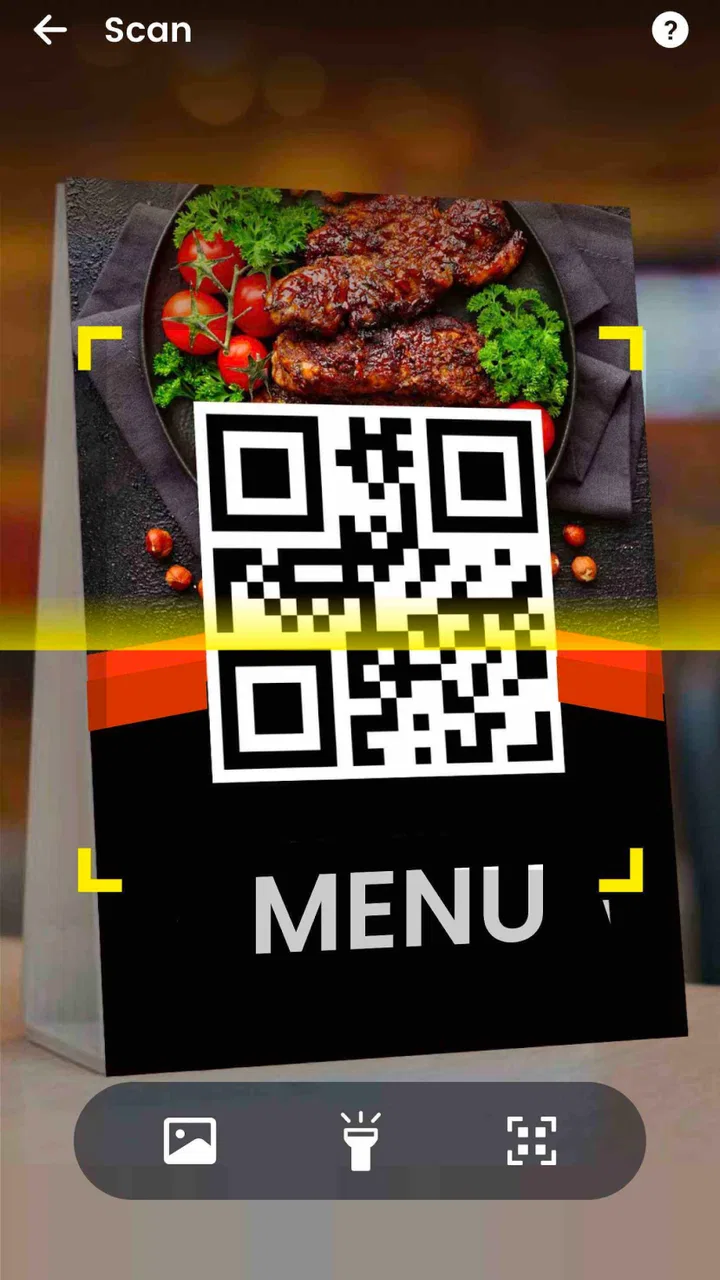
The central experience is straightforward: open the app, aim the camera at a code, and let the reader interpret it. That sounds ordinary, but the difference between a useful scanner and an annoying one is often the number of steps before the camera is ready. With this app, the emphasis is clearly on immediate scanning rather than turning the process into a larger workflow.
I find that especially useful for QR codes shown on a laptop or tablet. Instead of typing a long address into my phone, I can scan the code from the other screen. The same applies to printed menus, event notices, product boxes, and small labels where manually copying a sequence of characters would be error-prone. A barcode reader is also handy when I want to identify a product code without trying to read narrow lines and digits by eye.
There is a subtle benefit to using a dedicated scanner instead of relying on a general camera application: I know what I am opening the app to do. A normal camera may recognize some QR codes, but its behavior can vary by device, software version, or camera mode. A purpose-built tool gives me a more predictable starting point. That does not make it more powerful than every camera app, but it makes the intention clearer.
What happens when I use it in ordinary situations
My usual workflow is simple. I unlock the phone, launch the scanner, hold the camera steady, and move slightly closer or farther away until the code sits clearly inside the view. When the code is recognized, I can decide whether the result is useful before continuing. This pause is important because scanning a code should not automatically mean trusting everything behind it.
For a QR code on a poster, I first check the destination shown by the app before opening it. If the address looks unfamiliar or unrelated to the poster, I stop there. That habit is more valuable than scanning speed alone. A fast reader can save time, but it should not remove the small moment of judgment that protects me from following a suspicious destination.
For a barcode on packaging, I treat the result as an identifier rather than a guarantee of product information. A scanned number may help me search, compare, or record an item, but it does not automatically confirm that the product is genuine, available, or the cheapest option. This is one of the most useful ways to understand the app: it reads the code, while I remain responsible for interpreting what the code leads to.
A realistic everyday example
Imagine I am buying a household item and notice a barcode on the box. I can scan it instead of typing the number into a search field. If the result gives me a useful product reference, I have saved time and avoided mistakes caused by confusing similar digits. If I am looking at a QR code on a printed notice, I can open the associated page without manually entering a long web address.
The same workflow works when a friend shows me a QR code on their phone. I use the scanner on my own device, review the result, and continue only if it matches what I expected. That is a small interaction, but it is exactly where a focused productivity app earns its keep: the task is brief, and the app does not need to become part of my routine beyond that moment.
Tips that make scanning less frustrating
Lighting makes a noticeable difference. I get better results when I avoid strong reflections on glossy packaging and keep the phone steady rather than sweeping it rapidly across the code. If the code is on another screen, reducing glare and holding the phone parallel to that screen usually helps more than repeatedly tapping the display.
Distance is another practical detail. If the code looks too small, moving closer can help, but getting extremely close may make it harder for the camera to focus. I prefer to begin at a moderate distance and adjust slowly. For a damaged or partially covered code, changing the angle can sometimes reveal enough contrast for recognition, while aggressive movement usually makes the image less stable.
I also avoid scanning through a dirty camera lens. A faint smear can lower contrast and make a perfectly good code seem unreadable. Cleaning the lens, improving the light, and holding the phone still are simple fixes, but they are often more effective than assuming the application has failed.
Where it compares well with usual alternatives
The most obvious alternative is the phone’s built-in camera. If my device already recognizes QR codes reliably, I may not need another app for occasional scans. The camera has the advantage of already being familiar, and it may be faster to reach from the lock screen or a shortcut. For people who scan only once every few months, that convenience can outweigh the benefit of a dedicated reader.
On the other hand, a separate scanner makes sense when I want a tool whose whole purpose is code recognition. I do not have to switch from a photo mode, search for a camera option, or wonder whether the phone will display a prompt. The dedicated approach feels more direct, particularly on devices where the standard camera does not consistently recognize codes.
Another alternative is a shopping or retail app with a built-in barcode function. That can be better when my goal is specifically price comparison, product lookup, or purchasing. The trade-off is that those apps often place scanning inside a larger service. If I only want to read a code without committing to a particular shopping ecosystem, this focused reader is the cleaner choice.
The limits I noticed in the focused approach
A narrow tool is not automatically the right tool for every scanning job. I would not choose it as my main solution for managing a large inventory, organizing a warehouse, or building a detailed product database. Those tasks need structured records and broader workflows, while this app is centered on the immediate act of reading a code.
I would also skip it if my only concern is occasional QR scanning and my existing camera already does the job. Installing a separate application adds another icon and another piece of software to maintain. For a person who rarely encounters codes, the built-in option may be enough.
The free model is attractive for casual use, although in-app purchases are listed at $2.99 per item. That means I would check the purchase screen carefully before confirming anything, especially if I only need basic scanning. The presence of optional paid items does not stop the app from being useful as a free utility, but it is worth keeping expectations clear: free access and every possible extra are not necessarily the same thing.
There is also a difference between reading a code and completing the task behind it. A QR code may point to a page that loads slowly, requires an account, or is poorly designed for mobile screens. The scanner cannot fix those problems. In my experience, it is best to judge the app on the part it controls: recognizing the code and presenting the result efficiently.
Safety and judgment still belong to the user
I would not treat a successful scan as proof that a link is safe. QR codes can be placed on legitimate signs, but they can also be attached to misleading stickers or copied onto unrelated materials. I make a habit of checking the displayed destination and asking whether it makes sense in context. A code on a restaurant menu should not unexpectedly lead to an unrelated domain, and a payment-related code deserves extra caution.
For barcodes, I use the result as a starting point rather than a final answer. A matching product number can help me investigate an item, but it does not replace checking the label, seller, packaging, or return conditions. This distinction is easy to overlook because the scan feels authoritative. In reality, the app is a reader, not a verification service.
Who gets the most from it
This app suits people who regularly encounter QR codes but do not want a complicated companion service. Students can use it for codes printed on classroom materials, travelers can use it for signs and tickets, and shoppers can use it to capture product barcodes without typing them manually. It is also useful for anyone whose phone camera handles QR recognition inconsistently.
It can be a sensible choice for an older Android device too, since the minimum requirement is Android 6.0. That broad support makes it more practical than tools that assume a recent phone. I would still make sure the phone has a usable camera and enough light for the situations I expect to scan; software cannot compensate for a damaged lens or extremely poor image quality.
People who need detailed history, inventory management, advanced product research, or a specialized business workflow should look beyond this app. A dedicated scanner can be excellent at one quick action while remaining unsuitable as the foundation of a larger operation. That is not a flaw so much as a boundary, and recognizing it prevents disappointment.
My recommendation after using it
I recommend QR Code Scanner & Barcode Read when the goal is quick, uncomplicated code recognition. It is strongest when I need a small utility immediately, not when I need an entire product-management system. The one-click emphasis makes sense for everyday scanning, and the free entry point lowers the barrier for people who only need this function from time to time.
My final view is positive but measured. The app does not need to do everything to be useful; it needs to make scanning less awkward, and that is where it has a clear purpose. I would install it on a phone whose built-in camera is unreliable, or keep it available for printed and on-screen codes that I encounter regularly. If my camera already scans perfectly and I rarely use QR codes, I would probably stay with the built-in option. For everyone in between, QR Code Scanner & Barcode Read is a practical, focused addition to a productivity toolkit.
FAQs for QR Code Scanner & Barcode Read
01What features does the QR Code Scanner & Barcode Reader offer?
The QR Code Scanner & Barcode Reader offers a range of features including the ability to scan all standard 1D and 2D code types, such as QR codes and barcodes. It also provides instant scan results, history tracking, and even the ability to generate your own QR codes for personal or business use.
02Is the QR Code Scanner & Barcode Reader app free to use?
Yes, the app is free to download and use. However, it may offer in-app purchases or ads to support its development. Some advanced features or ad-free experiences might require a one-time purchase or subscription.
03How accurate is the scanning capability of the app?
The app is designed to be highly accurate, utilizing advanced scanning technology to quickly and precisely read codes. It works even in low-light conditions and supports a wide range of barcode and QR code standards, ensuring reliable performance in various environments.
04Does the app require an internet connection to function?
No, basic scanning functions do not require an internet connection, making it convenient for use anywhere. However, certain features like accessing online content embedded in a QR code or updates might need an internet connection.
05Is the QR Code Scanner & Barcode Reader safe to use?
Yes, the app is designed with user safety in mind. It doesn’t store personal data unless explicit permission is granted. Always ensure you download the app from official app stores and keep your device’s security software updated for added protection.
Pros
- Fast and accurate scanning of codes.
- Supports various QR and barcode formats.
- User-friendly interface for all ages.
- No internet connection required for scanning.
- Customizable scan settings and options.
Cons
- Contains ads which can be intrusive.
- Limited functionality in the free version.
- Occasional issues with low-light scanning.
- Doesn't support batch scanning of codes.
- Requires access to camera and storage.

QR Code Scanner & Barcode Read
Gallery